.svg)

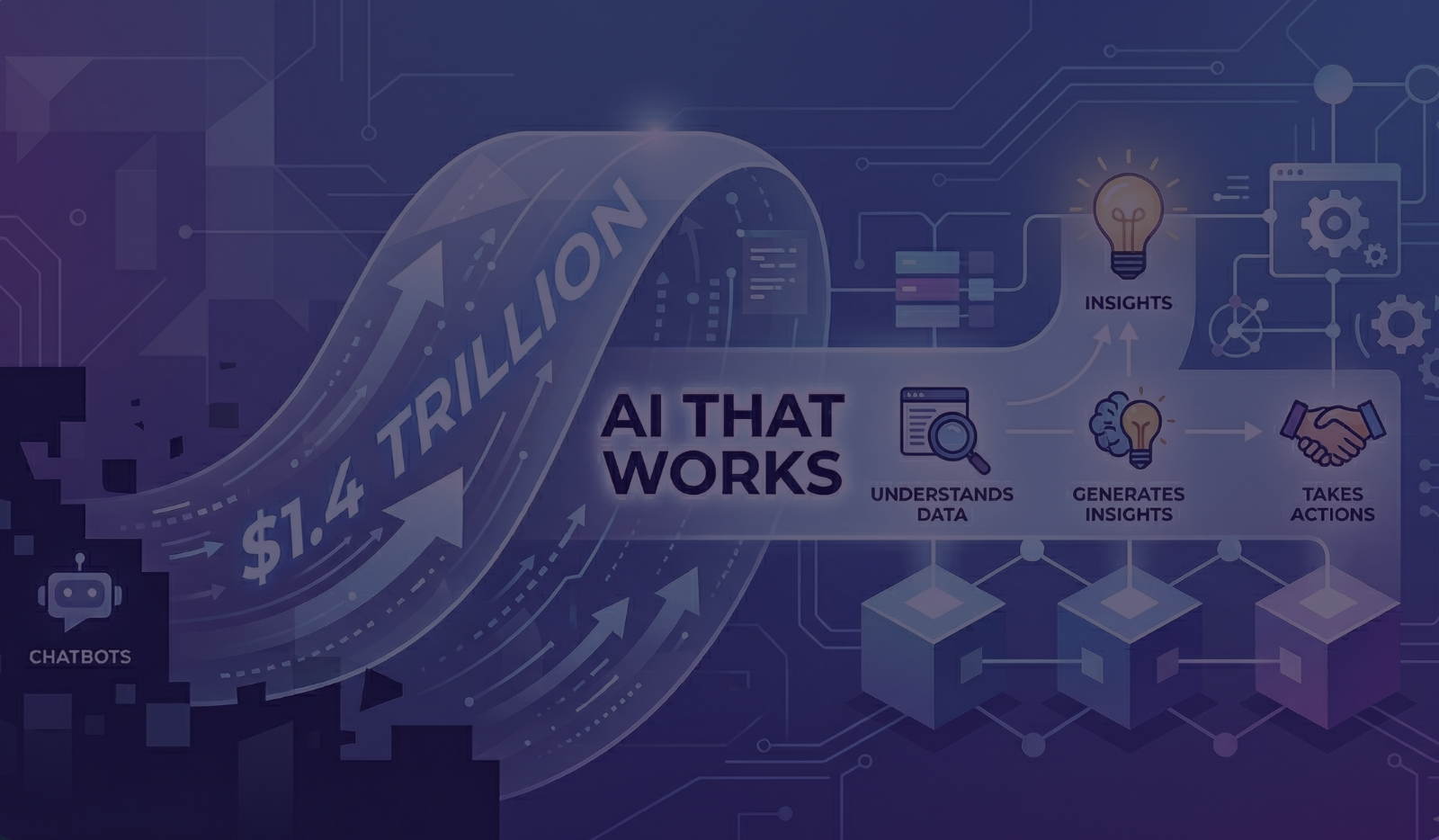
The Three Pillars of an AI-Native Analytics Stack

InsightHive
A production-ready, enterprise-grade AI analytics architecture is an "operational nervous system" built on three essential pillars: agentic capabilities, hybrid connectivity, and a semantic foundation. It moves beyond simple text answers to generate automated artifacts (like dashboards and CRM tasks) while simultaneously bridging historical data with live business signals. This architecture must be grounded in a semantic layer that defines business logic and protected by rigorous governance, including tenant isolation and audit trails. Ultimately, it transforms AI from a passive experiment into a reliable enterprise infrastructure.
Moving from a visionary concept to a functional reality requires a structural shift in how we handle data, intelligence, and action. To achieve this, we’ve identified the three non-negotiable pillars that transform a standard data warehouse into an active operational nervous system
Pillar 1: Agentic AI Analytics
AI should not just answer questions. It should generate artifacts and actions.
Imagine asking:
“Show churn risk this quarter compared to Gong call sentiment.”
Instead of returning text, the system builds a full dashboard:
- Churn trends
- Sentiment analysis
- Account risk heatmaps
Behind the scenes, AI agents reason through the problem:
Plan → Act → Refine → Respond.
And when they find something important, they don’t just report it.
They can trigger workflows:
- Create CRM tasks
- Alert account teams
- Update records
Insight becomes action.
Pillar 2: Hybrid Connectivity
AI needs two types of memory:
-
Deep Memory: Historical data for trends and forecasting.
-
Live Context: Real-time signals from the business.
Modern systems combine both:
- Warehouse data for analytics
- Liive CRM state
- Call transcripts
- Support conversations
- Cloud documents
And when AI identifies something important, it can write back into operational systems.
Analytics stops being passive.
It becomes part of the operational nervous system of the product.
Pillar 3: Semantic Foundation & Governance
The biggest reason AI fails? It doesn’t understand the business.
Raw database tables mean nothing to an LLM.
Without a semantic layer, AI guesses.
With one, AI understands:
- Revenue definitions
- Churn calculations
- Pipeline metrics
- Product usage signals
This ensures every AI insight is grounded in trusted business logic.
And governance matters just as much.
Enterprise AI must include:
- Tenant isolation
- Role-based permissions
- Full audit trails
- Human-in-the-loop validation
Without these guardrails, AI becomes an experiment.
With them, it becomes enterprise infrastructure.
Frequently Asked Questions
What is the difference between AI answering questions and "Agentic AI Analytics"?
Standard AI simply returns text, but Agentic AI Analytics reasons through a problem to generate actual artifacts and actions. Instead of a written summary, it builds full dashboards—such as sentiment analysis or risk heatmaps—and can trigger automated workflows like creating CRM tasks or updating records.
Why does an AI analytics stack require a "Semantic Foundation"?
Without a semantic layer, AI is forced to guess because raw database tables hold no inherent meaning for a Large Language Model. A semantic foundation ensures the AI understands specific business logic, such as revenue definitions and churn calculations, grounding every insight in trusted data rather than speculation.
What security guardrails are necessary for enterprise-grade AI?
To move AI from an experiment to a reliable infrastructure, the system must include robust governance features. This includes tenant isolation, role-based permissions, full audit trails, and human-in-the-loop validation to ensure data is protected and insights are verified.